
 Image 1 of 2
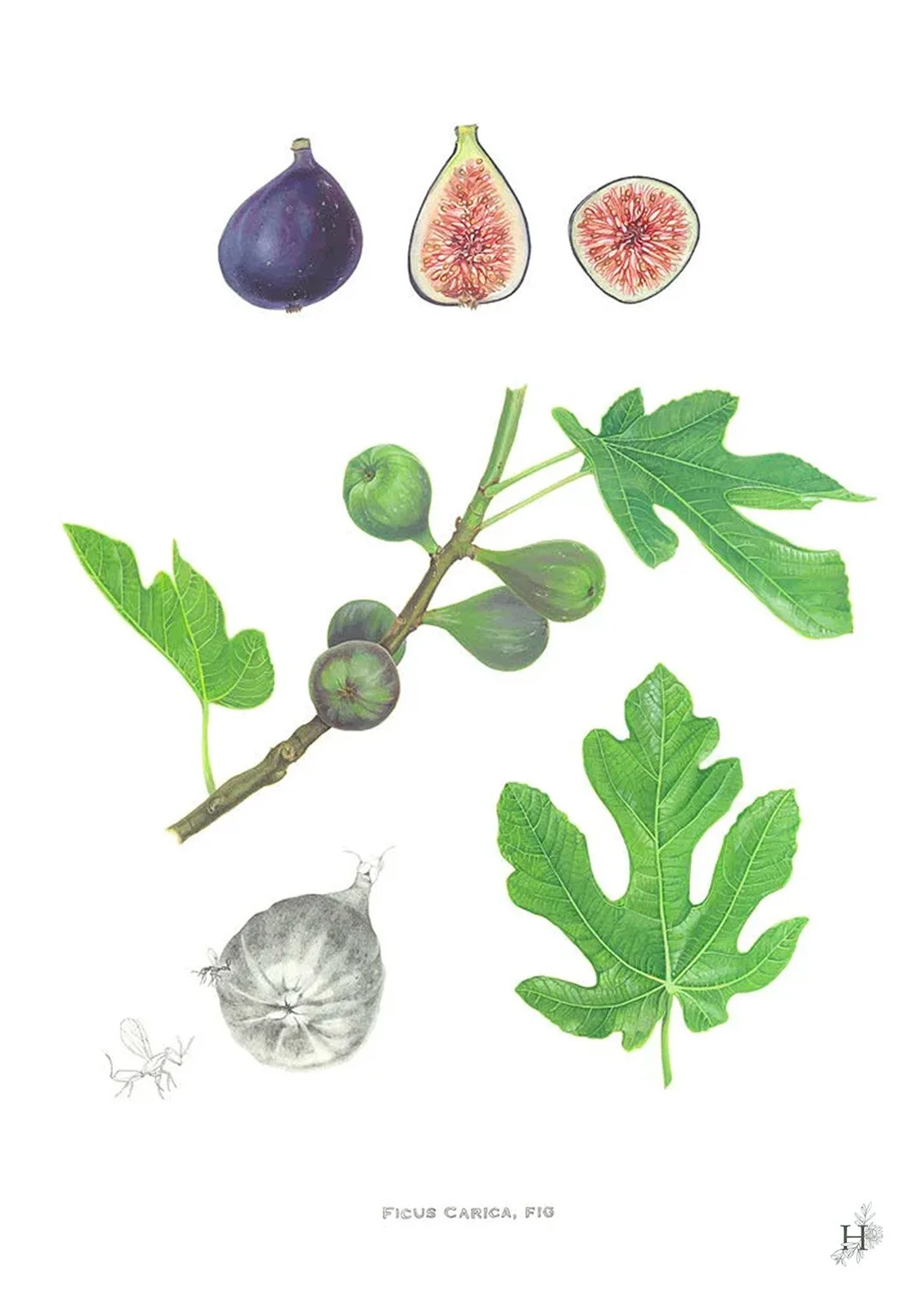 Image 2 of 2
On a medicinal note, the Fig fruit is a good source of dietary fibre, therefore offering a natural laxative effect. It has also been known to cure irritable bowel syndrome, and due to containing prebiotics, it can also help good bacteria in the gut, which will improve digestion.
Eating 3 figs a day can lower the risk of macular degeneration, which is an age-related loss of sight or blurred vision. This is because figs contain high amounts of carotenoids, antioxidants and Vitamins A, E, and C. Figs are also a great source of calcium. As they also contain potassium, they counteract the calcium loss caused by a high salt diet, preventing the bones from losing density at a faster rate.
With regards to hair care, eating figs can help with hair loss as they contain magnesium and also premature greying as they are a source of copper. Applying a fig paste topically to your skin can benefit eczema, dry or cracked skin, and treat inflammation.
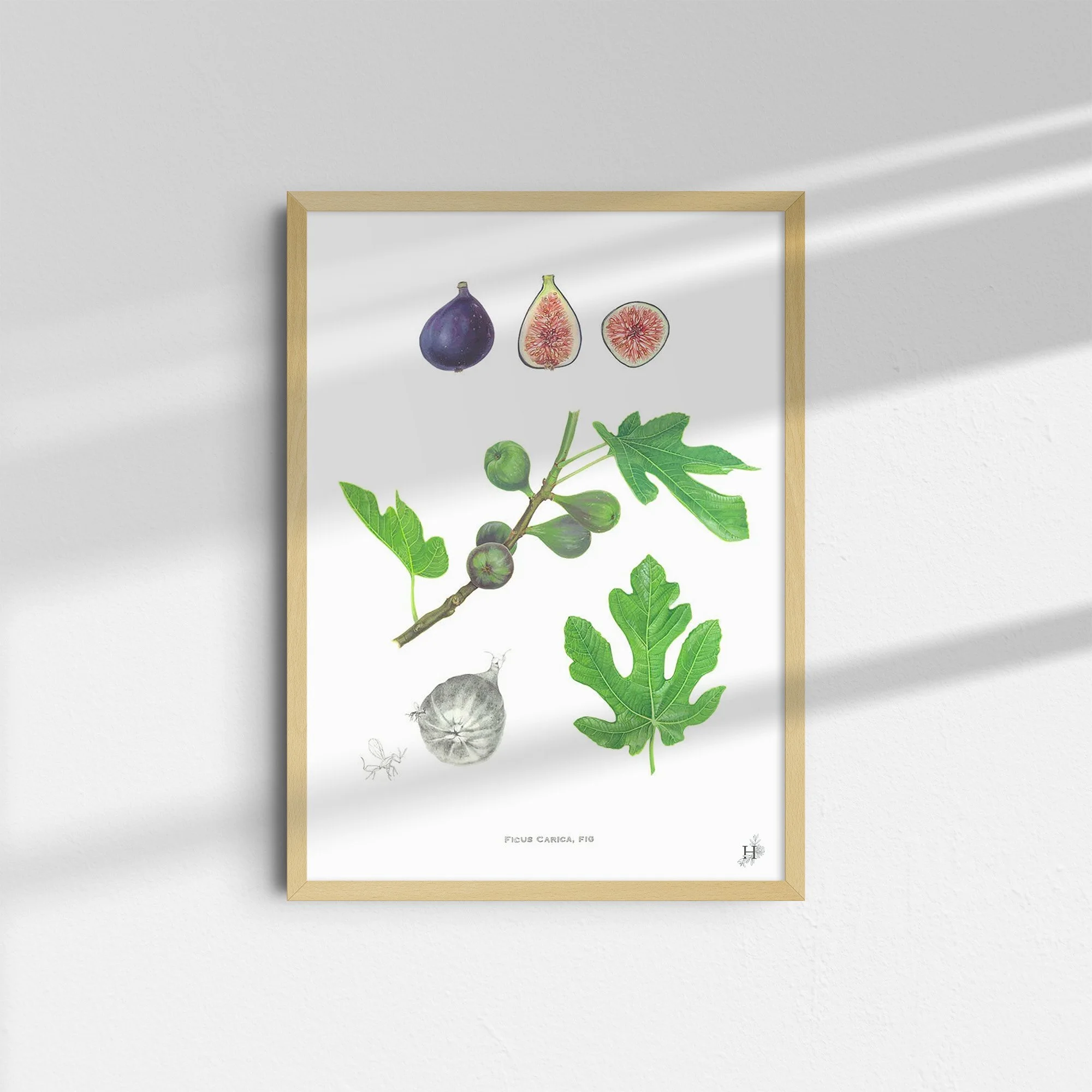
The pollination process of fig is absolutely fascinating. What we would actually call a fig (a structure called the syconium) is actually more of an inverted flower than a fruit. With all of the reproductive parts contained inside. The Pleistontes froggatti wasp has a long, narrow head, allowing her to slip through the narrow opening of the fig. The passage called the ostiole is so tight she actually loses her wings and antenna during the process. Once she is inside the fig she lays her eggs and deposits pollen from the nearby fig trees.
Hopefully, the female wasp will find herself a male caprifig, which will perfectly hold her eggs. If she happens to make her way into a female edible fig, she will unfortunately starve and die as it is the wrong shape for her inside the fruit. The eggs will grow and hatch into larvae, and then develop into male and female wasps. The blind male wingless wasps spend their lifetime tunnelling a way out through the fig. Which in turn, the females fly out carrying the essential pollen to begin the process again.
This is a unique symbiotic life cycle which has evolved over many years, and a wonderful example of the relationship between plants and their pollinators.
On a medicinal note, the Fig fruit is a good source of dietary fibre, therefore offering a natural laxative effect. It has also been known to cure irritable bowel syndrome, and due to containing prebiotics, it can also help good bacteria in the gut, which will improve digestion.
Eating 3 figs a day can lower the risk of macular degeneration, which is an age-related loss of sight or blurred vision. This is because figs contain high amounts of carotenoids, antioxidants and Vitamins A, E, and C. Figs are also a great source of calcium. As they also contain potassium, they counteract the calcium loss caused by a high salt diet, preventing the bones from losing density at a faster rate.
With regards to hair care, eating figs can help with hair loss as they contain magnesium and also premature greying as they are a source of copper. Applying a fig paste topically to your skin can benefit eczema, dry or cracked skin, and treat inflammation.
The pollination process of fig is absolutely fascinating. What we would actually call a fig (a structure called the syconium) is actually more of an inverted flower than a fruit. With all of the reproductive parts contained inside. The Pleistontes froggatti wasp has a long, narrow head, allowing her to slip through the narrow opening of the fig. The passage called the ostiole is so tight she actually loses her wings and antenna during the process. Once she is inside the fig she lays her eggs and deposits pollen from the nearby fig trees.
Hopefully, the female wasp will find herself a male caprifig, which will perfectly hold her eggs. If she happens to make her way into a female edible fig, she will unfortunately starve and die as it is the wrong shape for her inside the fruit. The eggs will grow and hatch into larvae, and then develop into male and female wasps. The blind male wingless wasps spend their lifetime tunnelling a way out through the fig. Which in turn, the females fly out carrying the essential pollen to begin the process again.
This is a unique symbiotic life cycle which has evolved over many years, and a wonderful example of the relationship between plants and their pollinators.